InfoTrove: terrorists

Saturday, March 21, 2015

ISIS is reportedly recruiting Indonesian domestic workers in Hong Kong

Photo: Oriental Daily

Recruiters for ISIS, an Islamic extremist rebel group, have reportedly being targeting Hong Kong’s Indonesian helpers.

A maid agency told Oriental Daily that many Indonesian domestic workers received what appeared to be recruitment leaflets for ISIS on Sunday.

The pamphlet encouraged domestic workers to join ISIS, which said it would send them to “do things” in Xinjiang province, but did not specify what they would be doing exactly.

Perhaps in a bid to appear relatable to domestic workers, the leaflet features a black and white photo of a dozen women wearing niqabs and holding a large ISIS flag.

“Their way dressing [in the photo] is not the most virtuous, but it is definitely the most covered,” says text in Bahasa Indonesia.

“On March 2, ISIS will be in Hong Kong to distribute pamphlets and recruit members.”

The text in Chinese says "There is no god but Allah” and “Allah is the true lord’s messenger”.

A staff member of an Indonesian domestic worker group believes ISIS began sporadic canvassing activities in Hong Kong two years ago with the help of one or two recruiters, according to Oriental Daily.

But they said that recently, however, a lot more recruiters have been showing up at popular hangout spots for Indonesian domestic workers, causing many to worry.

A lawyer told Oriental Daily that handing out religious pamphlets is not illegal, but if there is evidence that the related organisations are involved in terrorist activities, or intend to plan terrorist activities in Hong Kong, then it is an offence.

A police spokesperson said they have no reason to believe Hong Kong will become the target of a terrorist attack.

Source: Coconuts Hong Kong


Wednesday, March 4, 2015

ISIS militants trick mother into ‘eating her kidnapped son’


Islamic State brutes fed a distraught woman searching for her kidnapped son some meat and rice – and then told her she had just eaten her son, according to a British man who joined the fight against ISIS.

Yasir Abdulla, 36, of Yorkshire left his wife and four kids to battle the maniacal extremists in his Kurdish homeland, The Sun reported.

“I hate IS because of what happened to an old Kurdish woman from a nearby tribe,” he said. “Her son was captured by IS fighters and taken as a prisoner to Mosul. She was determined to find her son and went to IS headquarters and asked to see him.”
He said the thugs told her to rest after her long journey and offered her the food before taking her to her son.

“They brought her cups of tea and fed her a meal of cooked meat, rice and soup. She thought they were kind,” he said.“But they had killed him and chopped him up and after she finished the meal and asked to see her son they laughed and said, ‘You’ve just eaten him,’” Abdulla told The Sun.

Abdulla decided to take on the murderous group after they came within six miles of his home in Kurdistan.

He said he bought combat fatigues online and an assault rifle in his Kurdish hometown – then joined other volunteers on the front lines.

“We want to attack IS and drive them out forever but we can’t unless the Peshmerga and the Americans say we can,” he said, referring to the military forces of Iraqi Kurdistan.

Abdulla described the jihadists’ terror tactics, including slaughtering prisoners in bonfires.

“They dig a trench, put dry tree branches and leaves in there, set it alight and then throw prisoners on so they burn alive,” he said. “IS are very good at making people scared. If they make one person scared then that person will make another person scared and soon everyone is scared of IS.”

“But the Kurds are not scared of them. Someone has to stand and fight. We have got thousands of people in many villages and towns behind us. If we fall then all of those places fall, and that can’t happen.”

Yasir, who returned to the UK last week, remains confident and vows to return to Iraq to help the rebels defeat the fanatics.

Source: NY Post


Saturday, February 28, 2015

WATCH: SIS fighters destroy ancient artifacts at Mosul museum


Islamic State militants ransacked Mosul’s central museum, destroying priceless artefacts that are thousands of years old, in the group’s latest rampage which threatens to upend millennia of coexistence in the Middle East.

The destruction of statues and artefacts that date from the Assyrian and Akkadian empires, revealed in a video published by Isis on Thursday, drew ire from the international community and condemnation by activists and minorities that have been attacked by the group.

“The birthplace of human civilisation … is being destroyed”, said Kino Gabriel, one of the leaders of the Syriac Military Council – a Christian militia – in a telephone interview with the Guardian from Hassakeh in north-eastern Syria. The destruction took place in Mosul, the Iraqi city that has been under the control of Isis since June when jihadi fighters advanced rapidly across the country’s north.

“In front of something like this, we are speechless,” said Gabriel. “Murder of people and destruction is not enough, so even our civilisation and the culture of our people is being destroyed.”
Isis destroys thousands of books and manuscripts in Mosul libraries
Read more

The five-minute video, which was released by the “press office of the province of Nineveh [the region around Mosul]”, begins with a Qur’anic verse on idol worship. An Isis representative then speaks to the camera, condemning Assyrians and Akkadians as polytheists, justifying the destruction of the artefacts and statues.

The man describes the prophet Muhammad’s destruction of idols in Mecca as an example.

“These statues and idols, these artifacts, if God has ordered its removal, they became worthless to us even if they are worth billions of dollars,” the man said.
Advertisement

Isis militants then smash the statues in the Mosul museum with hammers and push them to the ground, watching them break into tiny fragments. The footage also shows a man dressed in black at a nearby archaeological site, inside Mosul, drilling through and destroying a winged bull, an Assyrian protective deity, that dates back to the 7th century BC

“When you watch the footage, you feel visceral pain and outrage, like you do when you see human beings hurt,” said Mardean Isaac, an Assyrian writer and member of A Demand for Action, an organisation dedicated to protecting the rights of the Assyrians and other minorities in Syria and Iraq.

A caption says the artefacts did not exist in the time of the prophet, and were put on display by “devil worshippers”, a term the militant group has used in the past to describe members of the Yazidi minority.

A professor at the Archaeology College in Mosul confirmed to the Associated Press that the two sites depicted in the video are the city museum and Nirgal Gate, one of several gates to Nineveh, the capital of the Assyrian empire.

“I’m totally shocked,” Amir al-Jumaili told the AP “It’s a catastrophe. With the destruction of these artefacts, we can no longer be proud of Mosul’s civilisation.”

Isis took control of Mosul last summer in a lightning advance that led to the eviction of thousands of Christians and other minorities from their ancestral homelands in the Nineveh plains, amid reports of forced conversions.

“We cannot expect anything else from Daesh,” said Gabriel, using the Arabic acronym for Isis.

He said the international community must act to prevent the destruction and looting of the artifacts.

“The loss is the loss of the entire world,” he said.

Isaac said: “While the Islamic State is ethnically cleansing the contemporary Assyrian populations of Iraq and Syria, they are also conducting a simultaneous war on their ancient history and the right of future generations of all ethnicities and religions to the material memory of their ancestors.”

The destruction of the priceless treasures comes days after Isis kidnapped 220 Assyrian Christian villagers in north-eastern Syria.

It is the latest assault in a campaign against coexistence in the region, especially in Iraq, which has seen the displacement of many of its Chaldean Christians, who have lived there with many ethnic minorities since the religion’s dawn.

Isis has also attempted to starve and enslave members of the Yazidi minority in Iraq.

Irina Bokova, the director general of Unesco, the UN cultural agency, said she was deeply shocked at the footage showing the destruction and has asked the president of the UN security council to convene an emergency meeting “on the protection of Iraq’s cultural heritage as an integral element for the country’s security”.

Source: The Guardian


Friday, February 27, 2015

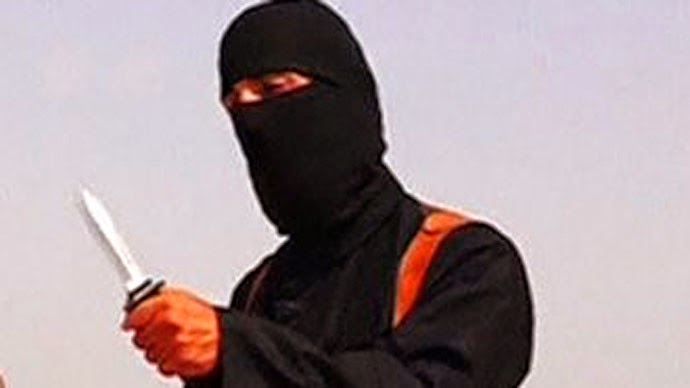
ISIS Executioner 'Jihadi John' Is Named as Mohammed Emwazi


LONDON — The identity of the masked executioner clutching a knife in ISIS beheading propaganda videos was revealed on Thursday.

A U.S. intelligence official confirmed to NBC News that a Londoner named Mohammed Emwazi is the person known as "Jihadi John" in the ISIS videos depicting the murders of American and British citizens. The militant's identity was first reported by The Washington Post, which cited "friends and others with familiar with his case." The BBC also named the individual without citing sources.

Emwazi is a Briton born in Kuwait who is known to intelligence services, according to the BBC and the Washington Post.

The Washington Post reported that Emwazi grew up in West London and graduated from college with a degree in computer programming before traveling to Syria in 2012 and joining ISIS.

The White House would not confirm or deny the identity, saying in a statement that the government continues to investigate the murder of American citizens by ISIS and that it does not comment on ongoing investigations. The Metropolitan Police said it would not confirm the reports and British government officials also declined to comment.

"Jihadi John" appeared in the videos showing the execution of American hostages James Foley and Steven Sotloff and Britons Alan Henning and David Haines.

He was given his nickname by the U.K. press because he was one of four Britons, dubbed the "Beatles" by their prisoners. He is also thought to have used the nom de guerre "Abu Saleh."

Previously, British and American officials have said they believed they had ascertained his identity but not named any individual.

Emwazi, who had strong links to Somalia according to U.K. security sources, appears to have become radicalized after he left university.

The International Centre for the Study of Radicalization, based at London's King's College, said it believed Emwazi's identity "to be accurate and correct."

A University of Westminster spokeswoman confirmed to NBC News that a student named Mohammed Emwazi left the college in 2009.

"If these allegations are true, we are shocked and sickened by the news," she said in a statement. "With other universities in London, we are working to implement the government's 'Prevent' strategy to tackle extremism."

U.K.-based human rights group CAGE said it had worked with Emwazi in 2010 after he complained of being arrested and questioned by agents from Britain's intelligence agency MI5 who accused him of links to Islamic extremism.
Emwazi told CAGE he had been detained in Tanzania in 2009 while attempting a post-college safari vacation with friends, and that he felt he had been harassed unfairly by intelligence agencies upon his return to Britain, the human-rights group said in a statement Thursday.

CAGE also released an email Thursday allegedly from Emwazi in which he complained that British authorities were unfairly preventing him from traveling to Kuwait.

"I have been trying to find out the reason for my refused Visa issue from my home country Kuwait, and a way to solve the issue," the email from 2010 read. "So through my friends in Kuwait, it has been said to me that Kuwait has no problem with me entering, and the reason for my refusal is simply because the U.K. agents have told them to not let me in!"

He added: "Now I feel like a prisoner, only not in a cage, in London. A person imprisoned and controlled by security service men, stopping me from living my new life in my birthplace and my country, Kuwait."

CAGE research director Asim Qureshi said in the statement that Emwazi bore a "some striking similarities" to Jihadi John in the beheading videos but that there was "no way" he could conclusively identify him as the man behind the mask.

There was no answer at an address in west London where Emwazi was listed as living.

A British government spokeswoman told reporters: "We don't confirm or deny matters relating to intelligence. I am not going to get into the details of an ongoing police and security investigation."

Source: NBC News


Monday, February 23, 2015

WATCH: New ISIS video shows Kurdish soldiers paraded in cages


Watch video at the bottom of the article.

Islamic State (ISIS) militants released new footage Saturday that allegedly shows 21 Kurdish Peshmerga fighters being paraded through crowded streets in the embattled Iraqi province of Kirkuk.

The beginning of the footage shows several men in cages being interviewed by an Islamic State militant holding a microphone with the group's insignia, before cutting to clips of several trucks with cages in the back being driven through cheering crowds. It is unclear where in the Kirkuk province this footage may have been taken or when it was recorded.

ISIS and the Kurdish Peshmerga fighters have been locked in a series of tense battles for control of the province since January.

 
The scene shown in the video echoes of an earlier execution the group carried out on Jordanian pilot Muath al-Kaseasbeh who was burned alive by ISIS militants while locked in a cage.

Images showing ISIS fighters parading Peshmerga fighters around a crowded street had also circulated earlier in February, so it is unclear when this newly released video was taken. Other video taken from the crowd shows similar scenes.

The footage may have been taken in the town of Hawija, located southwest of the city of Kirkuk, based on information from local Kurdish media and distinctive landmarks seen in the new video.

On Feb. 19, another ISIS-affiliated account posted a video claiming to show a raid against Peshmerga positions in Kirkuk.

Kirkuk, located along the border of Kurdish northern Iraq and the rest of the country, is home to Arabs, Kurds and Turkmen, and all have competing claims to the area.

Kurdish forces claimed control of the city just days after the Islamic State group seized northern Iraqi cities including Mosul and Tikrit.

Holding onto Kirkuk has not been easy. Last month, ISIS fighters — aided by what the Kurds say was a Sunni sleeper cell in the city — stormed an abandoned Kirkuk hotel, and then staged a surprise attack on a Peshmerga outpost, killing a top commander and several of his troops.


Wednesday, February 18, 2015

WARNING: GRAPHIC - ISIS terrorists release shocking video showing the beheading of 21 Egyptian Christians

WARNING: GRAPHIC VIDEO. WATCH AT YOUR OWN RISK.

The video shows ISIS fighters dressed head to toe in black, marching the captives, all wearing orange jumpsuits, to a beach.

The 21 men can be seen being forced onto their knees before they are beheaded by the militants standing behind them.

A caption on the five-minute video read: 'The people of the cross, followers of the hostile Egyptian church.


WATCH:


Source: Asian Town


Sunday, February 15, 2015

WATCH: ISIS video shows 17 captured Kurds paraded in cages


ISIS has paraded captured Kurdish soldiers in cages through screaming crowds in what some fear is a prequel to them being burned alive.
 
A total of 17 Peshmerga were led through the streets of what is apparently Kirkuk in northwestern Iraq

A video of the procession has appeared on Isis-affiliated social media accounts, showing the prisoners in orange jumpsuits and flanked by black-clad militants brandishing Kalashnikovs and the group’s black flag.

People lining the streets could be heard jeering and shouting “Allahu Akbar” as they passed one by one on the back of flat bed vans.

The captured soldiers were each forced to stand alone in a cage similar to that used in the murder of Jordanian pilot Muath al-Kasaesbeh as the convoy crawled through the town.
The footage was believed to have been filmed in Hawija, in Iraq’s Kirkuk province, although the date could not be confirmed.

Ari Mamshae, an Erbil-based senior civil servant in the Kurdish President’s office, said Isis had vowed to murder the 17 abducted Peshmerga fighters.

“They say they will burn them,” he wrote on Twitter.

Although the threats could not be verified, the plan would echo the death of Lieutenant al-Kasaesbeh.

The captured pilot had been shot down over Syria in December and intelligence sources believe he was killed in January.

Isis did not publish the gory propaganda video featuring his death – being doused in petrol and burned alive in a cage – until weeks later after claiming to be open to negotiating a prisoner exchange.

Jordan immediately executed two Isis-affiliated prisoners in retaliation and increased its air strikes against the group, which militants claimed killed American hostage Kayla Jean Mueller.

The Independent’s Middle East correspondent, Robert Fisk, said Isis burned captive Syrian soldiers to death months before Lieutenant al-Kasaesbeh's murder.

“Isis put captive Syrian soldiers to the torch – and then barbecued their heads on video,” he reported.

Most of Isis’ foreign hostages have been beheaded, including British aid workers David Haines and Alan Henning, and most recently Japanese journalist Kenji Goto.

The group has also filmed Peshmerga commanders being decapitated - most recently murdering Hujam Surchi earlier this month.

The Kurdish fighting force has been the group’s main opposition in Kirkuk and around Hawija, which was abandoned by the Iraqi army last year.

Isis fighters and the Peshmerga have been battling for control of the city of Kirkuk as well as waging a propaganda war on social media.

Kurds have posted graphic pictures of killed Isis militants, while the jihadists appear to be taunting them with the latest video of their comrades.

Source: The Independent


Wednesday, February 4, 2015

Jordan executes prisoners after ISIS murder of pilot

Iraqi Sajida al-Rishawi, 35, stands inside a military court at Juwaida prison in Amman on April 24, 2006. REUTERS © Majed Jaber / Reuters

Jordan has executed two death-row prisoners after vowing an "earth-shattering" response to avenge the burning alive of one of its fighter pilots by the Islamic State of Iraq and the Levant group.

Would-be Iraqi female suicide bomber Sajida al-Rishawi and Iraqi al-Qaeda member Ziad al-Karboli were hanged at dawn on Wednesday, government spokesman Mohammad al-Momani said.

A security source said the executions were carried out at Swaqa prison south of the capital Amman in the presence of an Islamic legal official.

Jordan had promised to begin executing the prisoners on death row at daybreak in response to the murder of Moaz al-Kassasbeh, who was captured by ISIL when his plane went down in Syria in December.

Rishawi, 44, was condemned to death for her participation in deadly attacks in Amman in 2005 and ISIL had offered to spare Kassasbeh's life and free a Japanese hostage - who was later beheaded - if she were released.

Al Jazeera's Nisreen El-Shamayleh, reporting from Amman, said that the executions took place at 5am local time (3:00 GMT).

"Usually, it is a long and highly bureaucratic process to carry out executions in Jordan. Several ministries and the king should approve them," she said.

"However, a security source told Al Jazeera last week that Jordan would speed up the process if the pilot was harmed."

Karboli was sentenced to death in 2007 on terrorism charges, including the killing of a Jordanian in Iraq.

Jordan had on Tuesday vowed to avenge the killing of Kassasbeh, hours after a harrowing video emerged online purporting to show the caged 26-year-old F-16 fighter pilot engulfed in flames.

The video - the most brutal yet in a series of gruesome recorded killings of hostages by ISIL - prompted global revulsion and vows of continued international efforts to combat the Sunni group.

Jordan, a crucial ally of Washington in the Middle East, is one of five Arab countries that has joined a US-led coalition of countries carrying out air strikes against ISIL in Syria and Iraq.

'Vile murder'

Jordan's King Abdullah II, who was visiting Washington as the video came to light, recorded a televised address to his shocked and outraged nation.

The king, once in the military himself, described Kassasbeh as a hero and vowed to take the battle to ISIL.

The army and government vowed to avenge the pilot's murder, with Momani saying: "Jordan's response will be earth-shattering.

The [US] president and King Abdullah reaffirmed that the vile murder of this brave Jordanian will only serve to steel the international community's resolve to destroy ISIL.

National Security Council spokesman

"Whoever doubted the unity of the Jordanian people, we will prove them wrong," he said.

US President Barack Obama, who hosted Abdullah in a hastily organised Oval Office meeting, led international condemnation of the murder, decrying the "cowardice and depravity" of ISIL.

"The president and King Abdullah reaffirmed that the vile murder of this brave Jordanian will only serve to steel the international community's resolve to destroy ISIL," a National Security Council spokesman said after the pair met.

The Obama administration had earlier reaffirmed its intention to give Jordan $3bn in security aid over the next three years.

Kassasbeh was captured in December when his jet crashed over northern Syria on a mission that was part of the coalition air campaign against the group.

Jordanian state television suggested he was killed on January 3, before ISIL offered to spare his life and free Japanese journalist Kenji Goto in return for Rishawi's release.

Highly choreographed

British Prime Minister David Cameron called the murder "sickening" while UN chief Ban Ki-moon labelled it an "appalling act".

Japan's Prime Minister Shinzo Abe condemned it as "unforgivable".

The highly choreographed 22-minute video shows Kassasbeh at a table recounting coalition operations against ISIL, with flags from the various Western and Arab countries in the alliance projected in the background.

It then shows Kassasbeh dressed in an orange jumpsuit and surrounded by armed and masked IS fighters in camouflage.

It cuts to him standing inside a cage and apparently soaked in petrol before a masked man uses a torch to light a trail of flame that runs to the cage and burns him alive.

The video also offered rewards for the killing of other "crusader" pilots.

ISIL had previously beheaded two US journalists, an American aid worker and two British aid workers in similar highly choreographed videos.

Source: Aljazeera